
Short answer
- If you apply for a new grid-tied solar connection in Pakistan today, you get net billing, not net metering.
- Every unit you export is bought at NEPRA’s national average energy purchase price, about Rs8 per unit right now.
- Every unit you import is charged at your normal tariff of roughly Rs37 to Rs55 before taxes.
- If you already have a valid net metering agreement, you keep the old terms until it expires.
That one change decides how you should size a system now. Below is what the rules actually say, what they mean for your monthly bill, and how we would design a home or factory system around them.
What changed on 9 February 2026
NEPRA notified the NEPRA (Prosumer) Regulations 2026, SRO 251(I)/2026. They replaced the 2015 net metering regulations that most Pakistani solar homes were connected under. Under the old system, units were swapped one for one: export 500 units in the day, import 500 at night, and the energy part of your bill came close to zero.
Under net billing, imports and exports are priced separately. Your DISCO (LESCO, IESCO, FESCO, GEPCO and the rest) charges what you import at the applicable consumer tariff, credits what you export at the national average energy purchase price, and sets one against the other at the end of each 30-day billing cycle.
The rules came with a public storm. The Prime Minister told the Power Division to seek a review, and NEPRA changed two things since then: existing users were protected, and the licence fee for small systems was dropped. Both are covered below.
Net metering vs net billing at a glance
| Item | Old net metering (2015 rules) | Net billing (2026 rules) |
|---|---|---|
| How exports are valued | Unit for unit against imports | National average energy purchase price (about Rs8/unit) |
| How imports are charged | Netted first, then normal tariff | Normal tariff on every imported unit |
| Agreement length | 7 years | 5 years, renewable by mutual consent |
| Maximum system size | Could exceed sanctioned load | Up to your sanctioned load |
| Surplus credit | Carried forward | Carried forward or paid quarterly |
| Can NEPRA change the export rate later? | Mattered little: most units were netted one for one | Yes, revised rates become part of your agreement |
What your exported units are worth now
Regulation 14 of the new rules ties the export price to the “national average energy purchase price”. That is the fuel-and-energy part of what the power sector pays generators, without capacity payments. NEPRA’s reference figure for 2026 is Rs8.13 per unit, the same buyback rate Profit reported when the rules came in. Some early reports quoted Rs10 to Rs11. Either way, the number is a fraction of what you pay to import.
Compare that with the Rs37 to Rs55 per unit households pay for grid power before taxes and surcharges.
The key ratio: a unit your house uses directly from the panels saves you four to six times more than a unit you send to the grid. Everything else in this article follows from it.
The rate is also not locked. Regulation 14(3) lets NEPRA revise it by notification, and power-sector projections for 2027 filed with NEPRA put the energy cost component at around Rs8.7 to Rs11.7 per unit depending on fuel prices and the rupee. Plan your payback on today’s figure, not a hoped-for increase.
I already have net metering. What happens to me?
The February notification first moved everyone to net billing. After the backlash, NEPRA issued an amendment to regulation 21, deemed effective from 9 February 2026. It says anyone with a valid agreement under the 2015 rules is billed under the old rate and mechanism until that agreement expires. ProPakistani and later Dawn reported net metering as restored for existing prosumers.
So if your seven-year agreement was signed in 2022, you keep one-for-one netting until 2029. When it expires, any extension follows the new rules. Two practical points:
- Find your agreement date now (it is on your DISCO agreement or ask your SDO office) and write the expiry in your calendar.
- Adding panels beyond what your agreement covers is a change to the facility. Ask your DISCO in writing before you expand, or you risk the extra capacity falling under the new terms.
What net billing does to a real bill
Here is a worked example for a Lahore house. The numbers are illustrative: we use a flat Rs50 per imported unit and Rs8.13 per exported unit, and ignore taxes, fixed charges and slabs so the effect is easy to see.
The house uses 1,000 units a month. A 10 kW system in Lahore produces roughly 1,200 units in an average month (less in December and January, more in spring). About 450 units are used directly during the day by fridges, fans, a daytime AC and the water pump. The other 750 are exported. At night the house imports 550 units.
| Setup | Energy part of monthly bill |
|---|---|
| No solar (1,000 units x Rs50) | Rs50,000 |
| 10 kW on old net metering (exports cover all imports) | About Rs0, plus 200 units carried forward |
| 10 kW on net billing (550 x Rs50 minus 750 x Rs8.13) | About Rs21,400 |
| 6 kW on net billing (550 x Rs50 minus 270 x Rs8.13) | About Rs25,300 |
| 10 kW hybrid with battery (190 imported, 350 exported) | About Rs6,650 |
Three things stand out. First, solar still saves real money: the on-grid 10 kW system cuts this bill by more than half. Second, the extra 4 kW between the 6 kW and 10 kW systems saves only about Rs3,900 a month, because almost all of it is exported at Rs8. Third, the battery case wins because it stores 400 daytime units (about 360 usable after losses) and replaces Rs50 night units with them.
Not sure what size fits your house?
Send a photo of your electricity bill on WhatsApp. We will check your sanctioned load and daytime use and tell you what makes sense under net billing.
How to size a solar system under net billing
1. Size for daytime use, not for a zero bill
Under the old rules, many installers sized systems to wipe out the whole monthly bill. That logic is gone for new connections. Look at your daytime load (roughly 9am to 4pm) across summer and winter, and size the array so most of its output is used on site. A little export is fine. A lot of export is money you spent on panels to sell power at Rs8.
2. Move loads into daylight
Running the water pump, washing machine, iron, geyser (if electric) and a pre-cooling AC between 10am and 3pm is the cheapest improvement you can make. In factories, schedule compressors, pumps and batch processes for the solar window where the process allows it. On farms, see our guide to the Punjab solar tubewell scheme and solar pumping.
3. Consider a hybrid system if your evenings are heavy
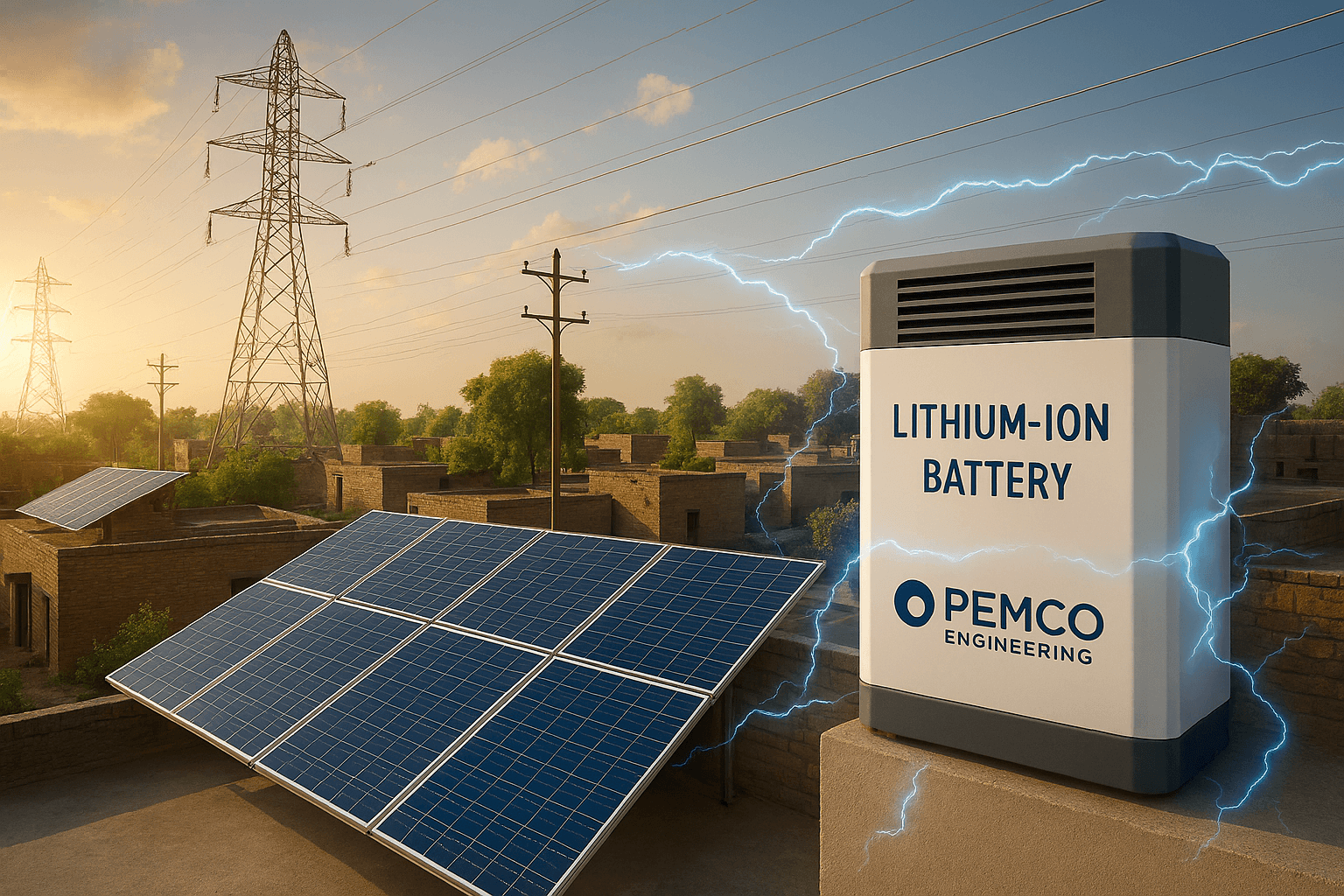
If most of your consumption is in the evening and night (ACs in bedrooms, for example), a hybrid inverter with batteries now earns its keep in a way it did not under net metering. It also covers load-shedding. Lithium batteries make more sense than lead-acid here because they handle a full daily cycle for many more years; our comparison of lithium-ion vs lead-acid batteries for solar explains why. Batteries add real cost, so the decision should come from your load profile, not a sales pitch. Our comparison of on-grid vs hybrid vs off-grid solar systems works through battery payback and load-shedding in more detail.
4. Stay within your sanctioned load
Regulation 3(2) caps the system at your sanctioned load. If your connection is sanctioned at 7 kW, a 10 kW net-billed system will not be accepted unless you first get the load extended. Check this on your bill before choosing a system size.
Applying for net billing: approvals, fees and limits
- Who approves: your DISCO. In April NEPRA withdrew the licence and fee requirement for systems of 25 kW or below, backdated to 9 February, according to Dawn. Systems above 25 kW pay a one-time NEPRA fee of Rs1,000 per kW.
- Connection type: the regulations define an applicant as a three-phase 400V or 11kV consumer. Most single-phase houses need a three-phase connection first.
- Transformer limit: the DISCO must refuse new applications once solar on your distribution transformer reaches 80% of its rating. In dense solar areas of Lahore this is a real risk, so apply early.
- Costs you pay: the bidirectional meter (or two meters) and any interconnection work up to the connection point.
- Timeline on paper: the regulations set deadlines for each step (5 working days to check documents, 15 for technical review, 7 to sign, 7 for the cost estimate, 15 to install after payment). Together that is about two to three months of working days. Plan for at least that. In Lahore, our step-by-step LESCO net billing application guide walks through each stage and the documents you need.
One more caution: surplus credit can be paid out quarterly, but Dawn noted that DISCOs have not paid such amounts in the past. Do not build your numbers around a cheque from LESCO.
Our earlier guide to how net metering worked is still useful background if you are on an old agreement, but its rates and payback figures no longer apply to new connections.
Is solar still worth it in 2026?
For most homes and almost every factory that runs in daylight, yes. Every unit you use from your own roof avoids Rs37 to Rs55 or more, and that does not depend on NEPRA’s buyback rate. What has changed is that oversized systems pay back much more slowly than before. For current market prices by system size, see our solar system price in Pakistan guide.
Solar is a weaker deal if your house is empty all day and nearly all use is at night, if your roof is shaded for much of the day, or if your sanctioned load is small and you cannot extend it. In those cases, a smaller system or a hybrid setup may be the honest answer, and sometimes waiting is too.
Frequently asked questions
Is net metering finished in Pakistan?
For new connections, yes. Since 9 February 2026 new grid-tied solar users are put on net billing. People with a valid net metering agreement under the 2015 rules keep the old terms until that agreement expires.
What rate does LESCO pay for exported solar units now?
All DISCOs, including LESCO, credit exports at NEPRA’s national average energy purchase price. NEPRA’s 2026 reference figure is Rs8.13 per unit. NEPRA can revise it by notification.
I already have net metering. Do I need to do anything?
No action is needed to keep your current terms. Note your agreement’s expiry date, and ask your DISCO in writing before adding panels, because a change to the system could bring it under the new rules.
Do I have to pay NEPRA Rs1,000 per kW for a home system?
Not for systems of 25 kW or below. NEPRA withdrew the licence and fee requirement for them in April 2026, backdated to 9 February. Systems above 25 kW pay a one-time Rs1,000 per kW.
Should I add batteries now that exports earn so little?
Only if you use a lot of power in the evening or need load-shedding backup. Batteries let you use your own daytime units at night instead of selling them for about Rs8 and buying back at Rs37 to Rs55, but they add cost and need replacing after their cycle life.
Get a system sized for net billing
PEMCO Engineering designs on-grid, hybrid and off-grid systems across Lahore and Punjab, sized around your daytime load and sanctioned load, not a zero-bill promise. See our solar system installation service across Punjab or, in Lahore, our page on solar installation in Lahore with LESCO net billing and DHA rules. Bring a recent electricity bill so we can check your sanctioned load and usage.
Written by the PEMCO Engineering Team. Rules and rates checked against NEPRA documents and news reports on 15 November 2026. This is general information, not legal advice; confirm current terms with your DISCO before you apply.