Solar Installation in Islamabad
On-grid, hybrid and off-grid solar for homes, offices and businesses in Islamabad, designed for IESCO net billing, the Margalla hail and the capital’s cold winters.
- 1 MW+ solar installed
- 10+ years experience
- 7+ Punjab cities covered
- Video consultation
By the PEMCO Engineering Team. Last updated 18 November 2026.
PEMCO Engineering designs and installs on-grid, hybrid and off-grid solar systems for houses, offices and businesses in Islamabad, and supports the IESCO net billing application. We are a registered Pakistani engineering company with more than 10 years of experience and more than 1 MW of solar installed. Our office is in DHA Phase 3, Lahore, and we work across Islamabad, Rawalpindi and the rest of Punjab. This page covers what is different about solar in the capital: IESCO’s 2026 rules, society approvals, hail, and a winter that cuts output far more than most people expect.
Video consultation anywhere in Punjab and in Islamabad. Send a photo of your latest IESCO bill and a few photos or a short video of your roof on WhatsApp. Our engineers go through it with you on a video call, then prepare a written quote. (Our free site survey covers Lahore and nearby areas.)
Which solar system suits an Islamabad home or business?
For most Islamabad homes the choice is between an on-grid system with IESCO net billing and a hybrid system with batteries. On-grid costs least and suits homes and offices that use most of their power in daylight. Hybrid makes sense if your heavy use is in the evening, such as heaters, geysers on electric backup or ACs at night, or if outages in your sector affect you.
On-grid (net billing)
Best for: offices, schools, clinics and homes with daytime load.
Outages: no power; it shuts down when the grid goes (a safety rule).
Trade-off: lowest cost; exported units earn little since 2026.
Hybrid (grid + batteries)
Best for: homes with evening and night use.
Outages: yes, from the batteries.
Trade-off: batteries add cost and wear out after their cycle life.
Off-grid
Best for: farmhouses and plots on the city’s edge, or hill sites with weak supply.
Outages: not affected.
Trade-off: batteries must cover every night and cloudy spell.
Honest advice: if your roof is heavily shaded by the tall trees common in older sectors, or your monthly use is small, solar may pay back slowly. We will tell you that on the video call rather than sell you a system that disappoints.
IESCO net billing in 2026: what it means in Islamabad
Since 9 February 2026, new solar connections in Islamabad and Rawalpindi get net billing instead of net metering. IESCO charges each imported unit at your normal tariff and credits each exported unit at NEPRA’s national average energy purchase price, which is Rs8.13 a unit for 2026, as Arab News reported. Existing net metering customers keep their terms until their agreement expires.
IESCO supplies the area from Attock to Jhelum, including Islamabad and Rawalpindi, so the same rules apply on both sides of the twin cities. In August 2026 the Power Division told DISCOs and PITC to verify applications that were still pending even though the consumer had paid the demand notice before 9 February, so those users may still be connected on the old terms. If that is you, keep your paid demand notice safe. Our guide to net billing in Pakistan under NEPRA’s 2026 rules explains the whole system.
Three rules decide whether your IESCO application goes through:
How we size a system for Islamabad’s weather
In Islamabad a solar system makes roughly half as much power in winter as in summer, so we size from a full year of IESCO bills, not one hot month. Profile Solar’s figures for Islamabad give about 6.8 units a day per kW of panels in summer, 6.4 in spring, 5.0 in autumn and only 3.75 in winter, and recommend south-facing panels at a fixed tilt of about 30 degrees.
- Read 12 months of bills for summer and winter use and your sanctioned load.
- Estimate the daytime load: ACs, fridges, water pumps and, in offices, computers and lighting.
- Check the roof: shade from trees, water tanks, mumtees and the Margalla side of hillside plots.
- Add batteries only if winter evening use or outages justify them.
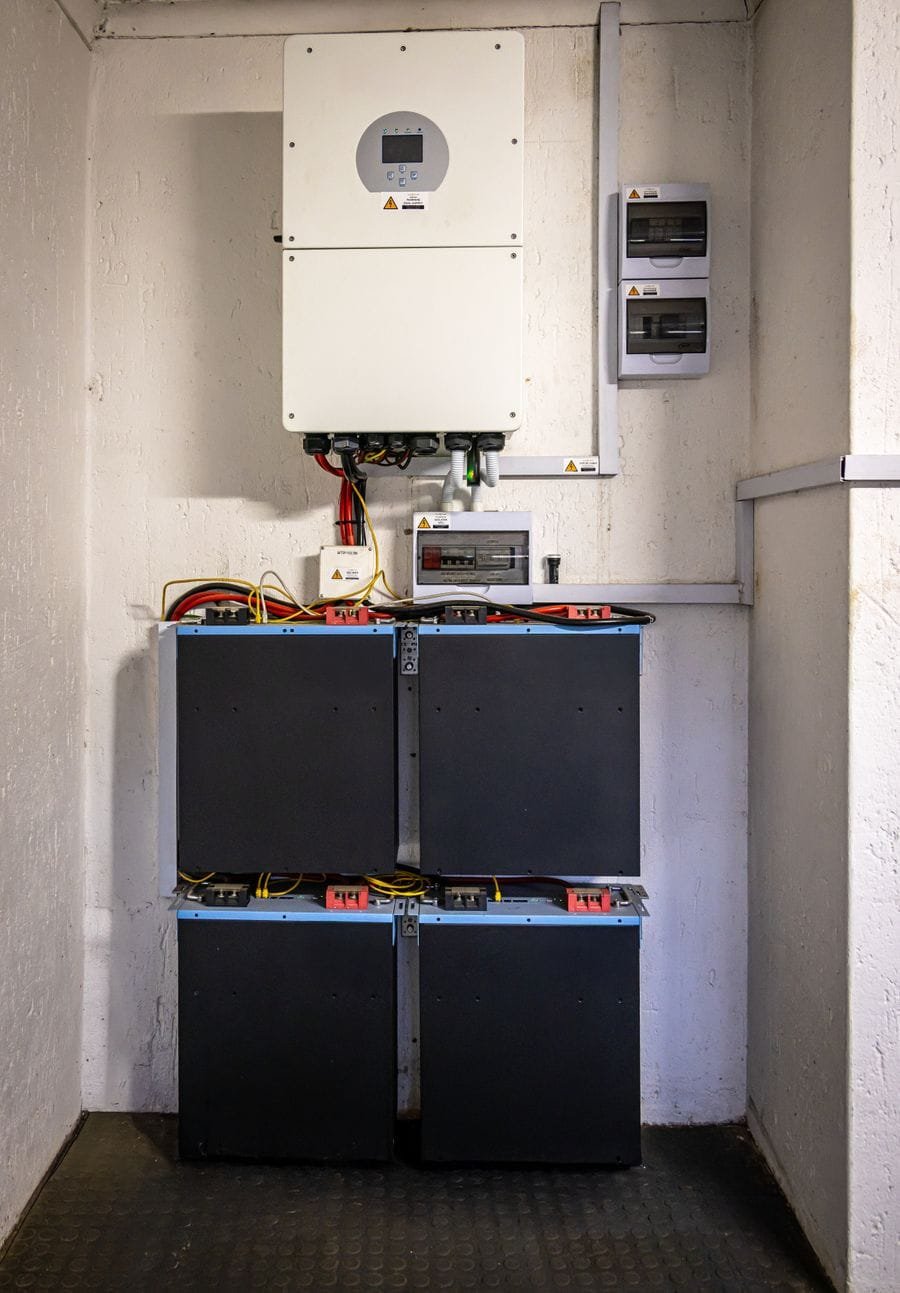
Illustration: a hybrid inverter with battery storage. (Stock photo: Magda Ehlers, Pexels)
Why winter matters more here than in Lahore: Islamabad homes often switch to electric heating and geysers in December and January, exactly when the panels make the least power. If your winter bill is your biggest, a hybrid system with a modest battery, or a slightly larger array within your sanctioned load, can be the better choice. We show you both options in the quote.
For battery choice, see our comparison of lithium-ion and lead-acid batteries for solar. For panels, see monocrystalline vs polycrystalline panels in Pakistan.
Protecting panels from Islamabad hail and storms
Hail is a real risk for solar in Islamabad. On 16 April 2025 a hailstorm dropped hailstones up to 1.2 inches across near the foot of the Margalla Hills and damaged car windscreens and rooftop solar panels across the city, Dawn reported. The standard panel test under IEC 61215 fires 25 mm ice balls at the glass; 1.2 inches is about 30 mm, so a storm like that is beyond what a basic panel is tested for.
Ask for the hail rating
Ask which hail test the panel passed and the glass thickness. Some manufacturers test with larger hailstones than the standard.
Check your insurance
Ask your home insurer whether rooftop panels are covered for hail and storm damage, and get it in writing.
Anchor for wind
Pre-monsoon storms can lift badly fixed, high-tilt frames. Use proper anchors, footings and a structure checked for wind load.
Brands we have installed include Jinko, LONGi, JA Solar and Canadian Solar panels, and Inverex, Growatt, Solis, Sungrow and other inverters. We compare their published test data for you rather than pick a brand on price alone.
DHA, Bahria Town and society rules for solar in Islamabad
In DHA Islamabad-Rawalpindi you must hire a solar firm registered with DHAI&R, and the firm submits a 3D design under the DHAI&R Byelaws 2023, followed by a site visit and approval from the Building Control Directorate, according to DHAI&R’s own website. Check any firm’s registration with DHAI&R before you sign.
- A 2022 DHAI&R clarification reported by Zameen allowed up to 10 kW on homes up to 1 kanal and up to 20 kW on 2 kanal and above, with roof panels’ lower edge at 5 feet and upper edge at no more than 10 feet. Confirm the current limits with DHAI&R, as the 2023 bylaws apply now.
- Panels on a mumtee or water tank roof had much tighter height limits in that clarification.
- Bahria Town, the CDA sectors and private societies such as Gulberg Greens have their own approval steps. Ask your society office what drawings and forms it needs before work starts.
- Whatever the society, keep the structure low, anchored and away from the roof edge, and keep the roof waterproof.
What decides the cost of a solar system in Islamabad?
The cost depends on system size, batteries, the panel and inverter brands, the mounting structure and the IESCO net billing work. Prices in Pakistan move with import costs and the exchange rate, so we quote in writing at current prices instead of publishing a list that goes out of date.
System size (kW)
Panels, inverter and structure scale with it.
Batteries
Often the biggest add-on in a hybrid system.
Inverter type
On-grid inverters cost less than hybrid ones.
Structure
Elevated or storm-rated frames need more steel and footings.
Cabling and protection
Earthing, surge protection and lightning arresters.
IESCO and approvals
Three-phase conversion or load extension if needed, plus society approval. NEPRA charges no fee up to 25 kW.
Send your IESCO bill and roof photos for a written quote at current prices.
How PEMCO’s solar installation works in Islamabad
Send your bill
WhatsApp your latest IESCO bill and roof photos or a short video.
Video consultation
Our engineers review your load, sanctioned load and roof with you on a video call.
Design and written quote
System type, size, equipment and structure agreed in writing.
Installation and testing
Our in-house installation team fits the structure, panels, inverter, cabling, earthing and protection, then commissions the system.
IESCO net billing
Net billing application support, plus the documents your society asks for.
After-sales
Call or WhatsApp us about faults or inverter errors after handover.
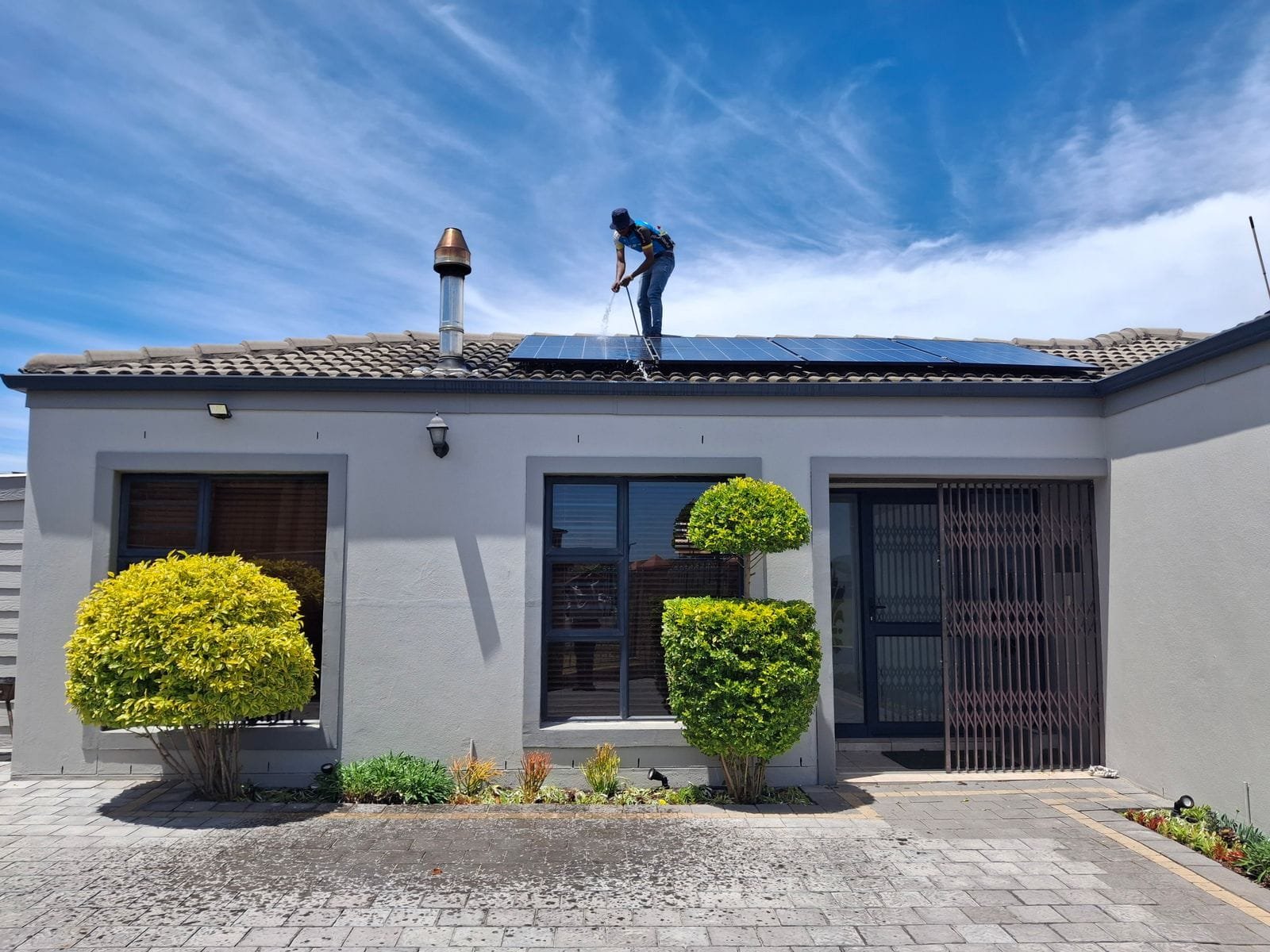
Illustration: washing panels with plain water. (Stock photo: Spaxido Spaxido, Pexels)
Keeping an Islamabad system productive
In Islamabad the main enemies of output are pollen, dust, leaves from tall trees and bird droppings, plus winter haze. Wash the panels with plain water and a soft brush early in the morning or in the evening, never when the glass is hot. After any hailstorm, look for cracked glass or a sudden drop in generation on the inverter app, and call us. Our guide to common solar inverter problems covers the usual error causes.
Areas we cover in Islamabad and nearby
We install solar across Islamabad, including the E, F, G and I sectors, DHA Islamabad, Bahria Town, Gulberg Greens and the I-9 and I-10 industrial areas. We also work in Rawalpindi, where our solar installation page covers small roofs and load-shedding, and in Murree, Lahore, Faisalabad, Gujranwala, Gujrat and the rest of Punjab. In Lahore, see our page on solar installation in Lahore, and for every system type see our main solar system installation service page.
- E & F sectors
- G sectors
- I sectors
- DHA Islamabad
- Bahria Town
- Gulberg Greens
- I-9 / I-10 industrial
- Rawalpindi
- Murree
- Lahore
- Faisalabad
- Gujranwala
- Gujrat
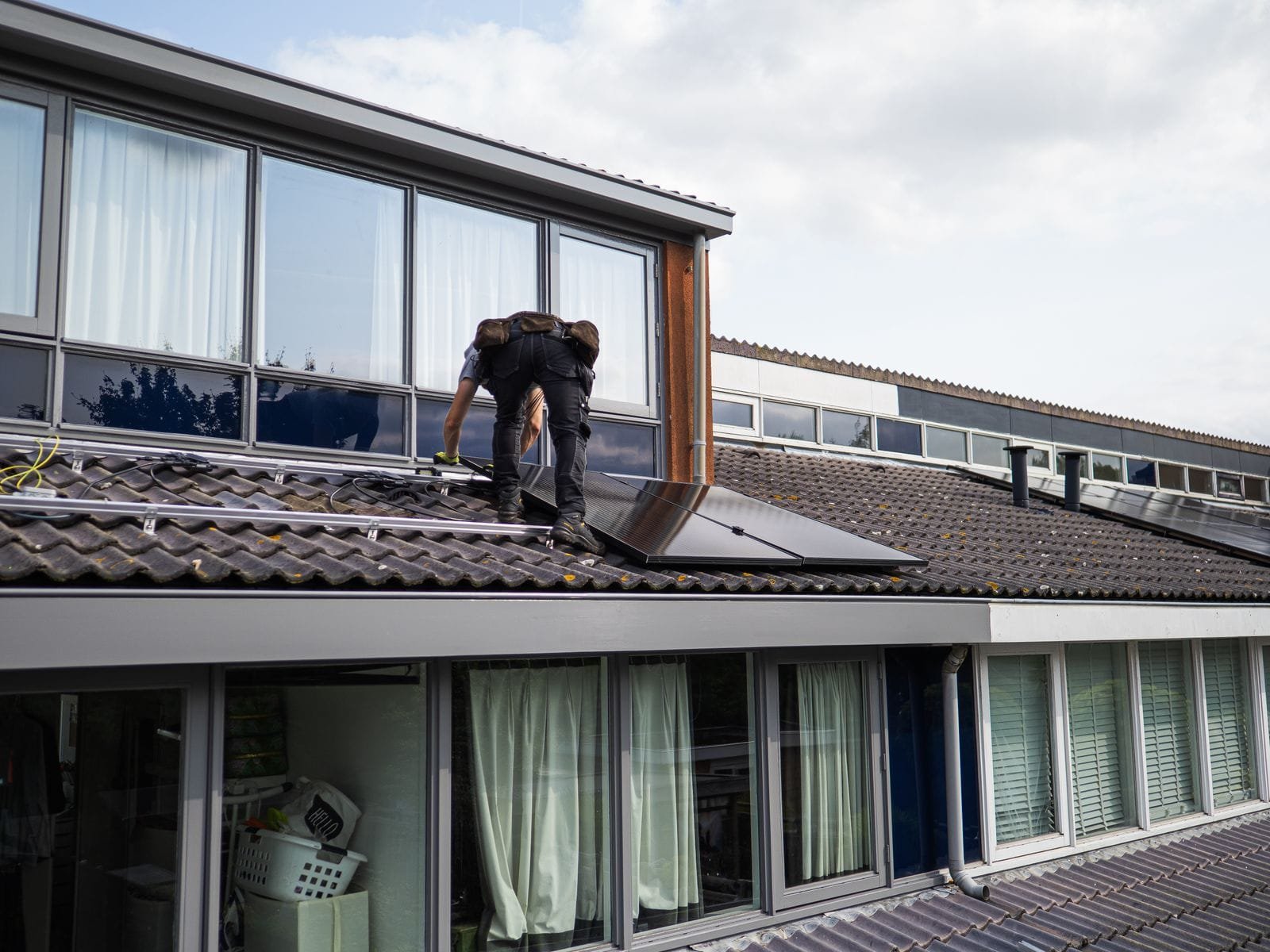
Illustration: panels being fixed to mounting rails. (Stock photo, Pexels)
Frequently asked questions
Can I still get net metering from IESCO in Islamabad?
Not for a new connection. Since 9 February 2026, new solar users in Islamabad and Rawalpindi get net billing, where IESCO credits exported units at NEPRA’s national average purchase price (Rs8.13 a unit for 2026) and charges imported units at your normal tariff. Existing net metering agreements continue until they expire.
Is solar still worth it in Islamabad under net billing?
Yes, when the system is sized to the power you use in daylight. Each unit you use straight from your roof saves the full IESCO tariff, while an exported unit earns about Rs8. Systems built mainly to export now take much longer to pay back.
Can hail damage solar panels in Islamabad?
Yes. The hailstorm of 16 April 2025 brought hailstones up to 1.2 inches across near the Margalla Hills and damaged rooftop solar panels across the city. Standard panel hail tests use 25 mm ice balls, so ask for the panel’s hail test rating and glass thickness, and check whether your home insurance covers panels.
Do I need approval to install solar in DHA Islamabad or Bahria Town?
In DHA Islamabad-Rawalpindi, yes: you must hire a solar firm registered with DHAI&R, which submits a 3D design under the DHAI&R Byelaws 2023, followed by a site visit and Building Control approval. Bahria Town and other societies have their own procedures, so check with your society office before work starts.
What size solar system do I need for a house in Islamabad?
It depends on your daytime load, sanctioned load and roof space. In Islamabad one kW of panels produces about 6.8 units a day in summer but only about 3.75 in winter, so we size from 12 months of IESCO bills rather than a single month.
Do you offer site surveys in Islamabad?
Our free site survey covers Lahore and nearby areas. For Islamabad and Rawalpindi we start with a video consultation: send your IESCO bill and roof photos or a short video on WhatsApp and our engineers guide you on a video call, then prepare a written quote.
Talk to a solar engineer about your Islamabad home
Call or WhatsApp PEMCO Engineering on 0322 4773987, email info@pemcoeng.com, or use our contact form. Send your IESCO bill and roof photos on WhatsApp and we will tell you what size and type of system fits.
Office: Y Block, DHA Phase 3, Lahore · Monday to Friday, 9am to 5pm