Short answer
- The CM Punjab Free Solar Panel Scheme gives free solar kits to households using up to 200 units a month, chosen by computerised ballot.
- In April 2026 the Punjab government extended the scheme to December 2026, for more than 94,000 systems costing about Rs10 billion.
- Reported kit sizes: 550W for up to 100 units, 1.1kW for 101-200 units, for consumers with a sanctioned load up to 2 kW.
- Apply only through the official portal cmsolarscheme.punjab.gov.pk or SMS 8800. Many look-alike sites are not official.
Updated 18 November 2026. This guide was first written in August 2025. We have rewritten it with the latest official news, what the free kit can and cannot run, and what households above 200 units can do instead.
Is the CM Punjab solar scheme still running in 2026?
Yes. The scheme was due to end in June 2026, but on 13 April 2026 the Punjab government extended it by six months to December 2026. The state news agency APP reported that more than 94,000 systems will be provided at a cost of about Rs10 billion, distributed through a lottery with additional funds.
ProPakistani added that over 800,000 applications had already been received and that the scheme covers all districts and tehsils of Punjab. With roughly eight applicants for every kit, most applicants will not be selected.
Is registration still open? News reports in April 2026 said citizens could register until December, but some websites now say registration has closed and the extension only covers delivery to people already selected. We could not confirm either from an official page, so check the official portal before you apply.
Who is eligible
The scheme is for low-consumption households in Punjab: up to 200 units a month and a sanctioned load of up to 2 kW. When the scheme was launched, Dawn reported that systems would go to consumers using up to 200 units a month, picked by computerised ballot, with the panel and inverter linked to the consumer’s CNIC to prevent theft. The 2 kW sanctioned load limit was reported by ARY News in April 2026.
- A legal, active electricity connection in Punjab (LESCO, FESCO, GEPCO, MEPCO and the other Punjab DISCOs)
- Monthly use up to 200 units, checked against your distribution company’s billing record
- Sanctioned load up to 2 kW
- One application per CNIC and per household
- Physical verification at your home if you are selected
What you get, and what it can realistically run
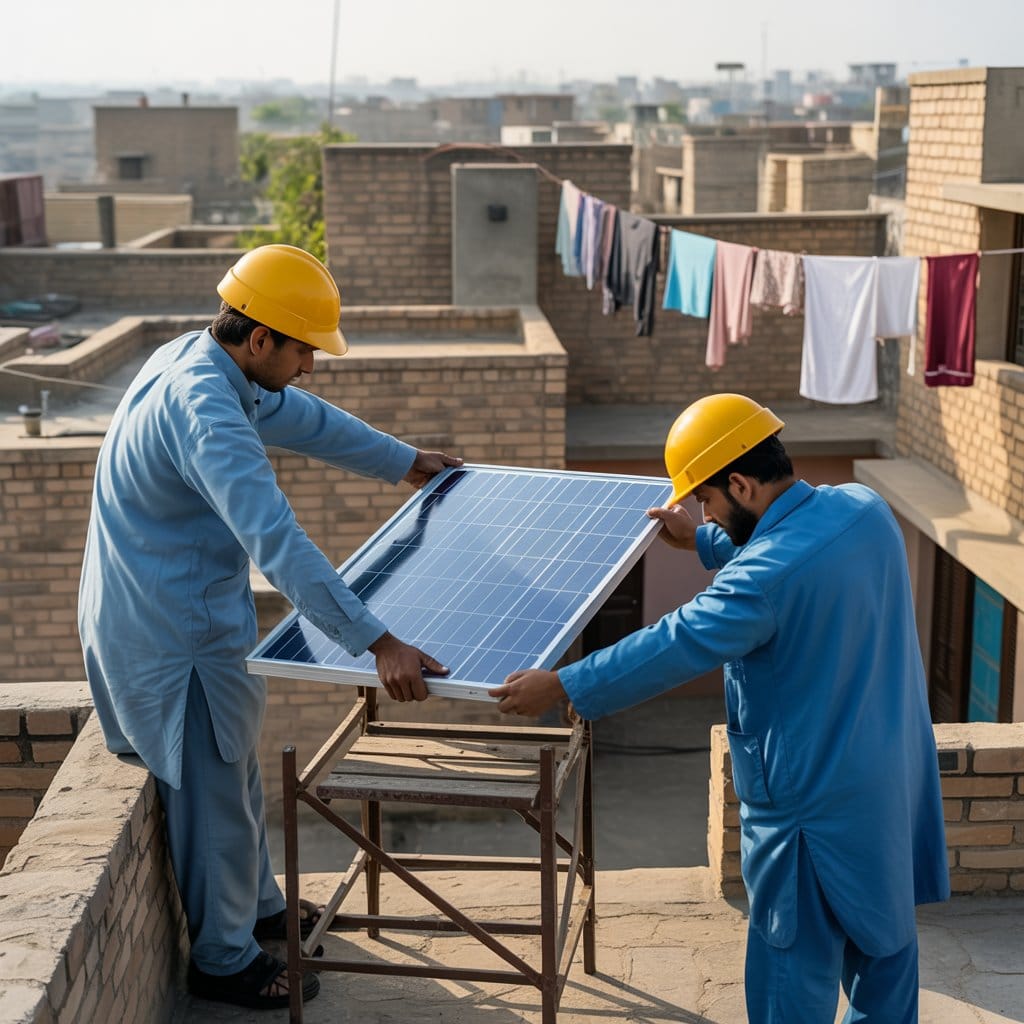
Widely reported kit sizes are 550W for households using up to 100 units and 1.1kW for households using 101-200 units, each with an inverter and wiring. These are small kits meant to cover the basics, mainly lights and fans.
As a rough engineering guide, a solar panel in central Punjab produces about 3.7 to 6.8 units a day for every kilowatt, depending on the season (winter lowest, early summer highest). That works out to:
| Kit | Typical output per day | Typical output per month |
|---|---|---|
| 550W | About 2 to 3.7 units | About 60 to 110 units |
| 1.1kW | About 4 to 7.5 units | About 120 to 220 units |
The catch is timing: solar only helps when you use the power while the sun shines, unless the kit stores it. Fans and lights during the day benefit fully; evening use only benefits if your kit includes a battery. Keep the panel clean and free of shade, and do not move it to a spot with less sun.
How to apply and check your status
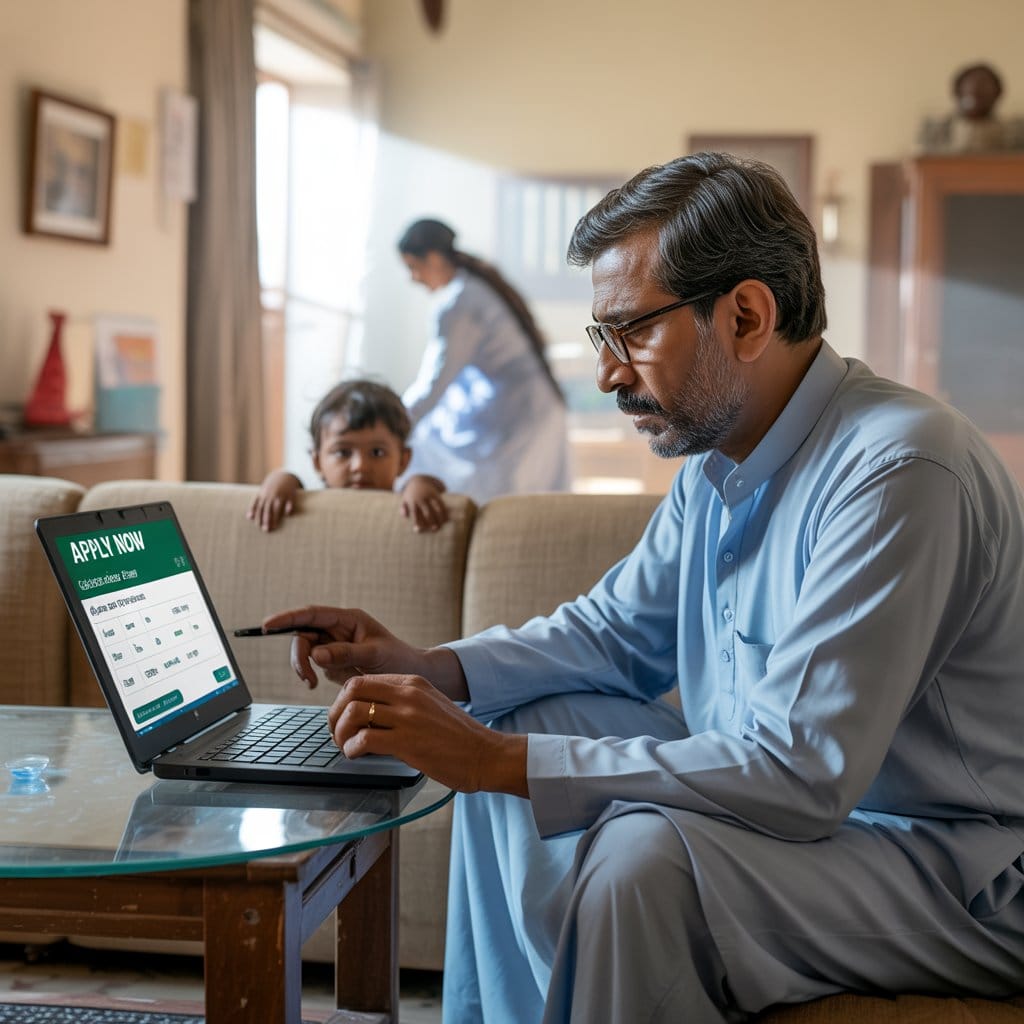
There are two official ways to register: the portal cmsolarscheme.punjab.gov.pk, or an SMS to 8800 with your CNIC and electricity bill reference number.
1. Register online or by SMS
On the official portal, enter your CNIC and the reference number printed on your electricity bill. By SMS, send the same two numbers to 8800.
2. Wait for the ballot
Eligible applications go into a computerised ballot. Because applications far exceed the number of kits, selection is not first come, first served.
3. Physical verification and installation
If selected, your home is verified before the kit is installed. The panel and inverter are registered against your CNIC, so they cannot legally be sold or moved to another person.
Watch out for fake scheme websites
The only official website ends in .punjab.gov.pk. Search results are full of look-alike sites ending in .com, .pk or .online that copy the scheme’s name, show ads, and sometimes ask for personal details. Some even give different eligibility rules and dates.
Simple rule: never share your CNIC, bill or phone number with any site that is not cmsolarscheme.punjab.gov.pk, and never pay anyone a “processing fee” to be selected.
Use more than 200 units, or need a bigger system?
WhatsApp a photo of your electricity bill and our engineers will tell you what size of solar system would actually cut it.
If you use more than 200 units
Households above 200 units are not eligible for the free kit, but a privately installed system sized to your daytime use can still cut your bill a lot. Most middle-income homes in Lahore and other Punjab cities run AC, a fridge and a water pump in the day, which is exactly when solar produces.
Since 9 February 2026, new grid-connected systems get net billing instead of net metering, so exported units earn about Rs8 while every unit you use from your own roof saves the full tariff. Our guide to net billing in Pakistan under NEPRA’s 2026 rules explains how to size for that, and the LESCO net billing application guide walks through the paperwork. You can also read about what happened to net metering in Pakistan.
You may also see the name “Roshan Gharana”. The Punjab cabinet approved a Roshan Gharana programme in July 2024 for solar panels on instalments for consumers using up to 500 units, with the government paying 90% of the cost, Aaj News reported. We could not find a current official update on that financing programme, so check the official portal before relying on it. Farmers looking for the separate tubewell subsidy can read our guide to the Punjab solar tubewell scheme.
Frequently asked questions
What is the last date of the CM Punjab solar scheme?
The Punjab government extended the scheme to December 2026 in April 2026. Whether new registrations are still accepted is reported differently by different sources, so check cmsolarscheme.punjab.gov.pk for the current status.
Who can get free solar panels in Punjab?
Households in Punjab using up to 200 units a month, with a sanctioned load of up to 2 kW and a legal electricity connection, chosen by computerised ballot. One application is allowed per CNIC and household.
How do I apply by SMS?
Send your CNIC number and your electricity bill reference number to 8800. You can also apply on the official portal, cmsolarscheme.punjab.gov.pk.
What size solar system does the scheme give?
Reported kit sizes are 550W for households using up to 100 units and 1.1kW for households using 101 to 200 units, with an inverter and wiring.
I use more than 200 units. What are my options?
You are not eligible for the free kit, but a private on-grid or hybrid system sized to your daytime use can still reduce your bill. New grid connections now get net billing, so size the system for self-use rather than export.
Plan a solar system that fits your bill
PEMCO Engineering designs and installs on-grid, hybrid and off-grid solar for homes, commercial buildings and factories across Punjab, with net billing application support. Call or WhatsApp 0322 4773987 or use our contact form. Free site survey in Lahore and nearby areas, and video consultation anywhere in Punjab. See also solar installation in Lahore.
Written by the PEMCO Engineering Team. PEMCO is a private company and is not part of the government scheme. Facts checked against APP, ProPakistani, ARY News and Dawn reports on 18 November 2026; scheme rules can change, so confirm on the official portal.