By the PEMCO Engineering Team, Lahore. Updated 25 November 2026.
Short answer
- Dust is the biggest loss you can control. Research in Lahore measured panels losing about 0.8% of their output per day to dust in the dry months, one of the highest rates recorded for any city.
- Heat takes roughly a tenth of output on a summer roof. You cannot stop it, but panels with a lower temperature coefficient and a ventilation gap underneath lose less.
- Tilt the panels at about 28-30 degrees facing south in central and north Punjab. Flat-laid panels collect more dust and produce less.
- Check your daily units against what a healthy system should make. Shade, a faulty string or a tripped inverter can quietly cost more than dust.
A solar panel’s efficiency is fixed at the factory: a 22% panel stays a 22% panel. What you can change is how much of that rating actually reaches your inverter. On Pakistani rooftops the gap between the label and real output is usually caused by five things: dust, heat, the wrong angle, shade, and faults nobody notices. This guide takes them in order of how much they usually cost.
Dust and smog: the biggest controllable loss
In Lahore, dust can take more output than any other single factor, and it builds up fast. Researchers at LUMS measured a soiling rate of about 0.8% per day on panels tilted at 30 degrees between October and January, among the highest rates reported for urban sites anywhere. They linked it partly to the high carbon content of Lahore’s dust, which comes from air pollution and sticks harder than plain sand.
An earlier study by the same group found that lightly soiled panels lose up to about 10% and heavily soiled panels up to 40%. A panel lying flat and left for 100 days lost 26.2% of its energy compared with a clean one.
Other dirt to watch for: bird droppings (they block whole cells and can cause hot spots), construction dust from a neighbour’s plot, and the grey film left behind when hard water dries on the glass.
How and when to clean solar panels
In Lahore and similar cities, clean every one to two weeks from October to February, after every dust storm, and less often during the monsoon. The old advice of once every month or two is too slow for Punjab’s smog season.
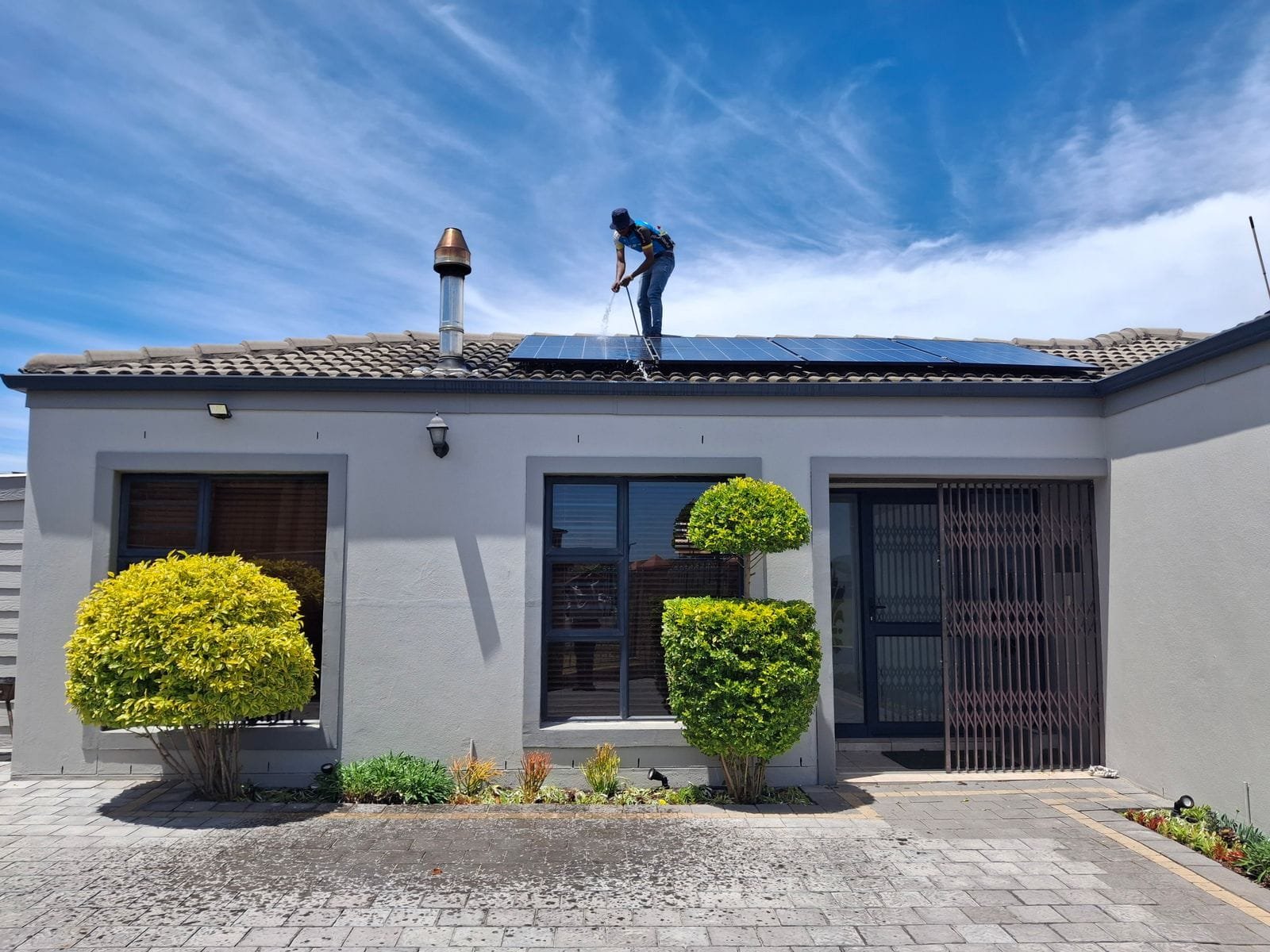
- Clean early in the morning or late in the afternoon, when the glass is cool. Cold water on glass that has been baking at midday is an unnecessary stress, and water evaporates too fast to rinse properly.
- Use plenty of water and a soft brush or sponge. No detergent unless the panel maker allows it, no scouring pads, no high-pressure jet on the edges and junction box.
- Watch your water. Very hard tubewell or tanker water leaves white spots. A final rinse with softer water or a rubber squeegee prevents the film.
- Never walk on panels and never stand on the frame. Use a long-handled brush from the roof or a safe walkway.
- Roof safety first. Falls from roofs during solar work happen in Punjab every year. Do not send anyone onto a roof without a parapet or harness.
If you have a large array, a simple check tells you whether more cleaning pays: note your daily units the day before and the day after a wash. If output jumps noticeably, you were waiting too long.
Heat: what summer takes and how to reduce it
Solar panels lose output as they get hotter, roughly 0.3% for every degree the cells run above 25°C. Panels are rated at a cell temperature of 25°C. On a Pakistani summer roof the cells often reach 60°C or more, so midday output in June is well below the label even under a blazing sun.
Every datasheet lists this as the temperature coefficient of power. Kiwa PVEL’s independent testing puts the median for N-type TOPCon panels at -0.29%/°C, against -0.32%/°C for older PERC panels, with heterojunction and back-contact panels slightly better still. At a 60°C cell temperature that works out (our arithmetic) to about 10% lost for a TOPCon panel and about 11% for a PERC panel.
| Cell temperature | TOPCon (-0.29%/°C) | PERC (-0.32%/°C) |
|---|---|---|
| 25°C (label rating) | 100% | 100% |
| 45°C (spring morning) | About 94% | About 94% |
| 60°C (summer midday) | About 90% | About 89% |
| 70°C (hot roof, poor airflow) | About 87% | About 86% |
What you can do about heat:
- Leave an air gap under the panels. Raised frames that let air flow underneath run cooler than panels laid tight on a hot slab.
- Compare temperature coefficients when you buy. A difference of 0.03 to 0.05%/°C adds up over 25 summers. Our guide to panel types in Pakistan explains why most panels sold in 2026 are N-type.
- Do not hose panels at midday to cool them. The gain is short-lived and it wastes water.
Cold, by the way, does not hurt panels. Cool, clear days give the best efficiency. Winter output in Punjab drops because of shorter days, a lower sun and fog and smog, not because of the cold.
Is your system making fewer units than it should?
WhatsApp us a screenshot of your inverter app or your last few electricity bills. Our engineers will tell you on a video call whether the shortfall looks like dust, shade, heat or a fault. Free site survey in Lahore and nearby areas, video consultation anywhere in Punjab.
Tilt and direction for Punjab
For year-round output in central and north Punjab, face the panels due south at about 28 to 30 degrees. That matches the optimum tilt that solar resource data gives for Lahore, Islamabad and Rawalpindi, and a steeper panel also sheds dust better than a flat one.
- Flat is the worst choice. In the LUMS study, the flat panel lost almost twice as much energy to dust over 100 days as a vertical one.
- East-west arrays are not wrong. On a cramped roof they can fit more panels and spread output across the day, at some cost in total yield. That trade can make sense under net billing, where daytime self-use is worth far more than exports.
- Do not chase a perfect angle at the cost of shade. A panel at 25 degrees in full sun beats one at 30 degrees in the shadow of a water tank.
Seasonal output also varies a lot. For Rawalpindi and Islamabad, a fixed south-facing system makes roughly 6.8 units per kW per day in summer but only about 3.75 in winter, which our Rawalpindi solar page explains in more detail. A low December reading on its own does not mean something is broken.
Shade and wiring mistakes
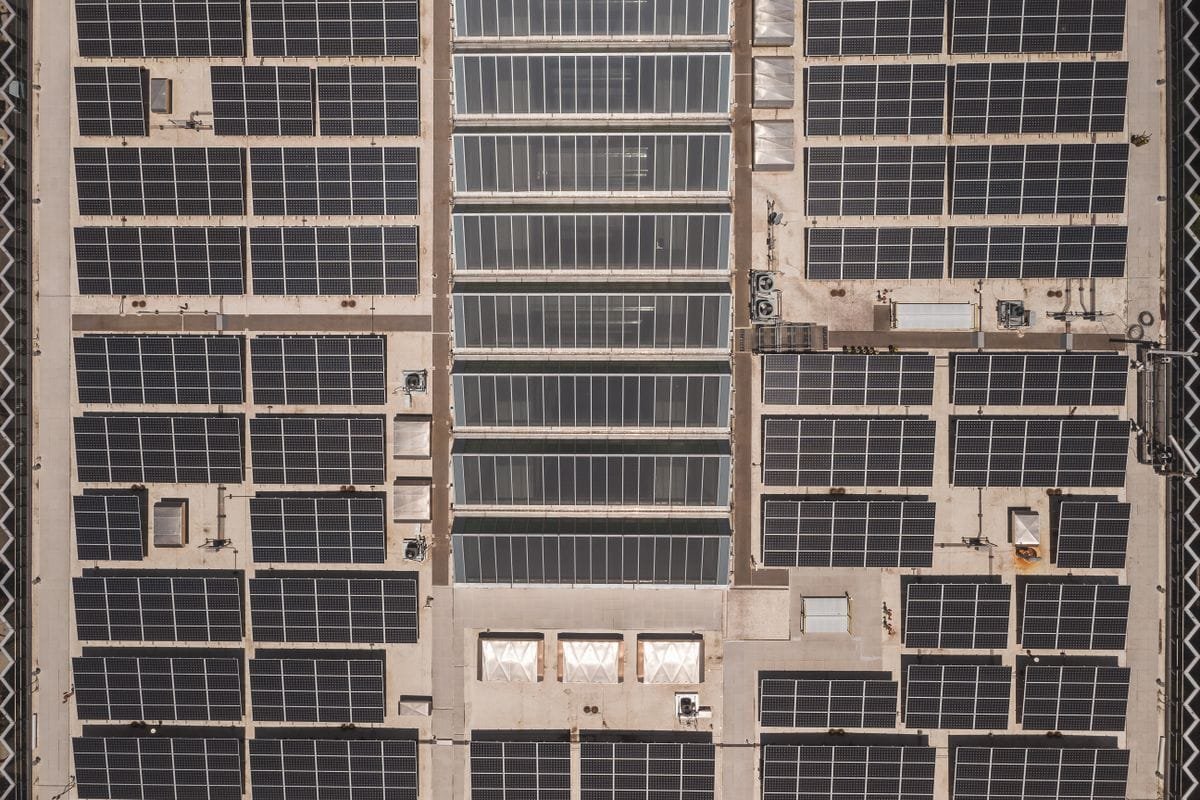
A little shade on one panel can drag down a whole string, so shade costs far more than the shaded area suggests. Panels in a string carry the same current. When one is shaded, its bypass diodes switch in, the panel’s output collapses, and the inverter’s tracker may settle at a lower point for the whole string.
Common causes we see on Punjab rooftops:
- Water tanks, mumtee walls and a neighbour’s upper floor, especially in winter when the sun is low and shadows are long.
- Rows packed too close on a flat roof, so the front row shades the back row in December.
- Panels facing different directions on one tracker. Each roof face should go to its own MPPT input, or use optimisers.
- Long, thin DC cables that lose power as heat, and loose or mismatched MC4 connectors that can overheat.
- An inverter that is badly matched to the array, cutting off power at midday or never starting early in the morning.
Most of these are design decisions, which is why they are cheap to get right before installation and expensive to fix later. If your inverter shows error codes, our guide to solar inverter problems covers the common ones.
How to check your system is performing
Divide your daily units by your system size in kW and compare the result with what your city and season should give. In Punjab, a healthy, clean, unshaded system usually lands somewhere between about 3.5 units per kW per day in mid-winter and 6.5 to 7 in late spring and summer.
- Note a week of daily units from your inverter app or display, on clear days only.
- Work out units per kW: a 10 kW system making 55 units a day is producing 5.5 units per kW.
- Compare with the season. Well below the range on a clear day usually points to dust, shade or a fault.
- Clean and check again. If cleaning does not restore output, check each string’s voltage and current in the app, or ask an engineer to test the strings.
- Keep a monthly record. Panels lose a fraction of a percent a year; a sudden drop is never normal ageing.
Under net billing, every unit you use in daylight is worth several times what an exported unit earns, so lost output costs more than it did under net metering. Our guides on on-grid vs hybrid solar and solar system prices in Pakistan explain how that changes system design and payback.
Frequently asked questions
How can I increase my solar panel output in Pakistan?
Keep the panels clean, especially from October to February, make sure nothing shades them, tilt them at about 28 to 30 degrees facing south, leave an air gap underneath so they run cooler, and check daily units against what a healthy system should make. A panel’s efficiency rating cannot be raised, but these steps reduce the losses between the rating and real output.
How often should solar panels be cleaned in Lahore?
Every one to two weeks from October to February, after every dust storm, and less often in the monsoon when rain washes them. Research in Lahore measured dust losses of about 0.8% of output per day in the dry months, so monthly cleaning is too slow in winter.
Do solar panels work less in summer heat?
Yes. Output falls by roughly 0.3% for every degree the cells run above 25°C. On a summer roof cells often reach 60°C, so a modern N-type panel produces about 10% less than its label at that moment. Strong sunshine still makes summer days the most productive overall.
What is the best tilt angle for solar panels in Lahore?
About 28 to 30 degrees facing due south gives good year-round output in Lahore and north Punjab. Steeper panels also shed dust better; flat panels collect much more dust and lose more energy.
How many units should a 10 kW solar system make per day in Punjab?
As a rough guide, about 35 to 40 units on a clear mid-winter day and 60 to 70 on a clear day in late spring or summer, if the system is clean, unshaded and well designed. Much less than that on a clear day usually points to dust, shade or a fault.
Get more from your solar system
PEMCO Engineering has 10+ years of experience and more than 1 MW of solar installed across Punjab. We design on-grid, hybrid and off-grid systems around your roof, shade and usage. See our solar system installation service, or our city pages for Lahore, Islamabad and Rawalpindi. Call or WhatsApp 0322 4773987.
Written by the PEMCO Engineering Team. Facts checked on 25 November 2026 against Ullah et al., Renewable Energy (2019, vol. 139; 2020, vol. 150) on soiling in Lahore, and Kiwa PVEL’s PV Module Reliability Scorecard on temperature coefficients. Output figures are typical ranges, not a guarantee for any specific system.