By the PEMCO Engineering Team, Lahore. Updated 25 November 2026.
Short answer
- Solar still pays well for factories that run in daylight: a well-sized on-grid system typically pays back in roughly 2-3 years, because almost every unit is used on site.
- Size it to your daytime base load, not your monthly units. Under net billing, surplus units earn only about Rs8.13 each.
- The rules: up to 1 MW, no bigger than your sanctioned load, a three-phase 400V or 11 kV connection, and NEPRA concurrence plus Rs1,000 per kW above 25 kW.
- Solar does not cut your fixed charge per kW or your evening peak units. A battery can, but only pays if you cycle it every day.
Factory owners ask us two things: will solar really cut my bill, and what is the catch? The honest answer is that a factory is a better fit for solar than most houses, but the savings come from a different place than the brochures suggest. This guide covers sizing, the 2026 rules for industrial connections, real savings at today’s industrial tariff, and when a battery is worth it.
Why factories suit solar better than houses
A factory uses power when the sun shines, so almost nothing is exported at the low net billing rate. A house is empty at noon and busy at night, so a large share of its solar is sold to the grid for about Rs8 and bought back later at full price.
Factories also have big, flat or gently sloped shed roofs, a three-phase connection already in place, and a load that does not change much from week to week. Those three things make sizing easier and installation cheaper per kW. Since 9 February 2026, every new connection gets net billing instead of net metering, and that change hurts factories far less than homes.
What a solar unit is worth on an industrial bill
On an industrial bill, a solar unit used in daytime saves the off-peak rate, not the peak rate. Solar produces during off-peak hours, so that is the rate it replaces. In February 2026 the government cut industrial tariffs by up to Rs4.58 a unit, following a NEPRA decision of 11 February.
| Category | Peak (Rs/unit) | Off-peak (Rs/unit) | Fixed charge |
|---|---|---|---|
| B1: up to 25 kW, low tension | 35.74 | 25.48 | Rs1,250 per consumer a month |
| B2: 25-500 kW | 35.68 | 22.83 | Rs1,250 per kW a month |
| B3: 11-33 kV supply | 35.68 | 23.67 | Rs1,250 per kW a month |
| B4: 66-132 kV and above | 35.68 | 23.38 | Rs1,250 per kW a month |
Two things follow from this table. First, solar saves a B2 factory roughly Rs23 a unit before taxes and adjustments, not the Rs50-55 some sales pages quote. That is still about three times what an exported unit earns. Second, the fixed charge is per kW of load, and solar does not reduce it. A factory with 200 kW billed load pays about Rs2.5 lakh a month in fixed charges with or without panels.
How to size a factory system
Size to the power your machines draw between about 10am and 3pm on a normal working day. That is the base load solar can cover without exporting much. Monthly units alone will mislead you if you run a night shift or close on Sundays.
1. Find your daytime load
The maximum demand indicator (MDI) on your bill shows the highest load you reached, but not your typical daytime load. A few days of logging with a clamp meter or a power analyser on the main incomer gives a far better picture. Note the lowest load during working hours: that is the figure solar can safely cover.
2. Match the shifts
- One day shift, six days a week: size to the daytime base load. Fridays and Sundays will export more, which is fine in moderation.
- Two or three shifts: daytime use is steady, so you can size closer to the daytime average load.
- Seasonal work (rice mills, ginning, cold stores): size for the months you run, or accept that off-season output is mostly exported at about Rs8.
3. Check the roof and the transformer
As a rule of thumb, each 100 kW of panels needs roughly 600-700 square metres of clear roof. In Lahore, each kW produces around 110-130 units a month on average, so 100 kW gives about 11,000-13,000 units a month, less in December and January. Your DISCO will also check how much solar is already on your transformer, covered in the rules below.
Send us your factory bill
WhatsApp your last 12 months of bills and a few roof photos. Our engineers will estimate your daytime load and a sensible system size on a video call. Free site survey in Lahore and nearby areas, video consultation anywhere in Punjab.
2026 rules for industrial solar
The NEPRA Prosumer Regulations 2026 cover systems from 1 kW to 1 MW, and a factory system cannot be bigger than its sanctioned load. These are the points that matter most for industry, from the regulations as notified on 9 February 2026 and later amendments.
- Who can apply: three-phase 400V or 11 kV consumers, including industrial and bulk supply connections.
- Size limit: no more than your sanctioned load, and no more than 1 MW. Above 1 MW you are outside this framework.
- 250 kW and above: a load flow study is needed, done by the DISCO or a consultant registered with the Pakistan Engineering Council.
- Transformer limit: the DISCO will not accept new applications once solar on that transformer reaches 80% of its rating.
- Above 25 kW: NEPRA concurrence and a one-time fee of Rs1,000 per kW, so a 200 kW system pays Rs2 lakh. Systems of 25 kW or below were exempted from the fee in April and from NEPRA concurrence in August.
- Export rate: exported units are credited at the national average energy purchase price, about Rs8.13 a unit, and NEPRA can revise it.
- Agreement: five years, renewable by mutual consent.
- Inverters: must meet the UL 1741 standard.
On paper, the DISCO steps take two to three months of working days. Our LESCO solar application guide lists each step and its deadline.
Savings and payback: a 100 kW example
For a B2 factory on a day shift, a 100 kW on-grid system saves roughly Rs2.8 lakh a month before taxes. The example below is illustrative and deliberately conservative: it uses only the off-peak energy charge and ignores adjustments, duty and sales tax, which would raise the saving.
| 100 kW on-grid, B2 factory, day shift | Figure |
|---|---|
| Solar output | about 13,000 units a month |
| Used on site (90%) x Rs22.83 off-peak | 11,700 units = about Rs2.67 lakh |
| Exported (10%) x Rs8.13 | 1,300 units = about Rs10,600 |
| Monthly saving | about Rs2.78 lakh |
| Yearly saving | about Rs33 lakh |
| Payback if the system costs Rs70 lakh to Rs1 crore | about 2 to 3 years |
Published prices for systems this size are scarce. The only 100 kW figure we found online, from a Lahore installer in November 2025, put on-grid systems at Rs60-80 lakh, before this year’s panel price rise. Per kW, factory systems cost less than home systems because the inverter, cabling and labour are spread over more panels. Our solar system price guide shows how prices fall per kW as systems grow.
The honest exceptions: if your factory exports a third of its output, works one shift three days a week, or sits under a roof with years of life left in it, the payback gets longer. Fix the roof first.
Batteries for factories: when they pay
A battery pays in a factory when it moves solar units into the evening peak every day. A unit stored at noon instead of exported gives up Rs8.13 and replaces a peak unit at Rs35.68, a gain of about Rs27.5 before losses.
For 100 kWh of usable storage cycled every working day, that is roughly Rs65,000-75,000 a month after charging losses, or about Rs8-9 lakh a year. Lithium (LiFePO4) storage was quoted at around Rs35,000-55,000 per kWh for smaller systems this year, so 100 kWh may cost Rs35-55 lakh before the inverter. That points to a payback of roughly four to seven years, which is slower than the panels but can still be worth it.
- Worth it: you run into the evening peak, your feeder has frequent outages that stop production, or you replace an expensive diesel generator run.
- Not worth it yet: you close at 5pm, your peak units are small, or you simply want a lower bill. Spend on more panels first, up to your daytime load.
- Middle path: buy hybrid or battery-ready inverters now and add storage once you have a year of solar data.
Our comparison of on-grid vs hybrid vs off-grid solar goes deeper into backup and battery choices.
Roof, structure and safety
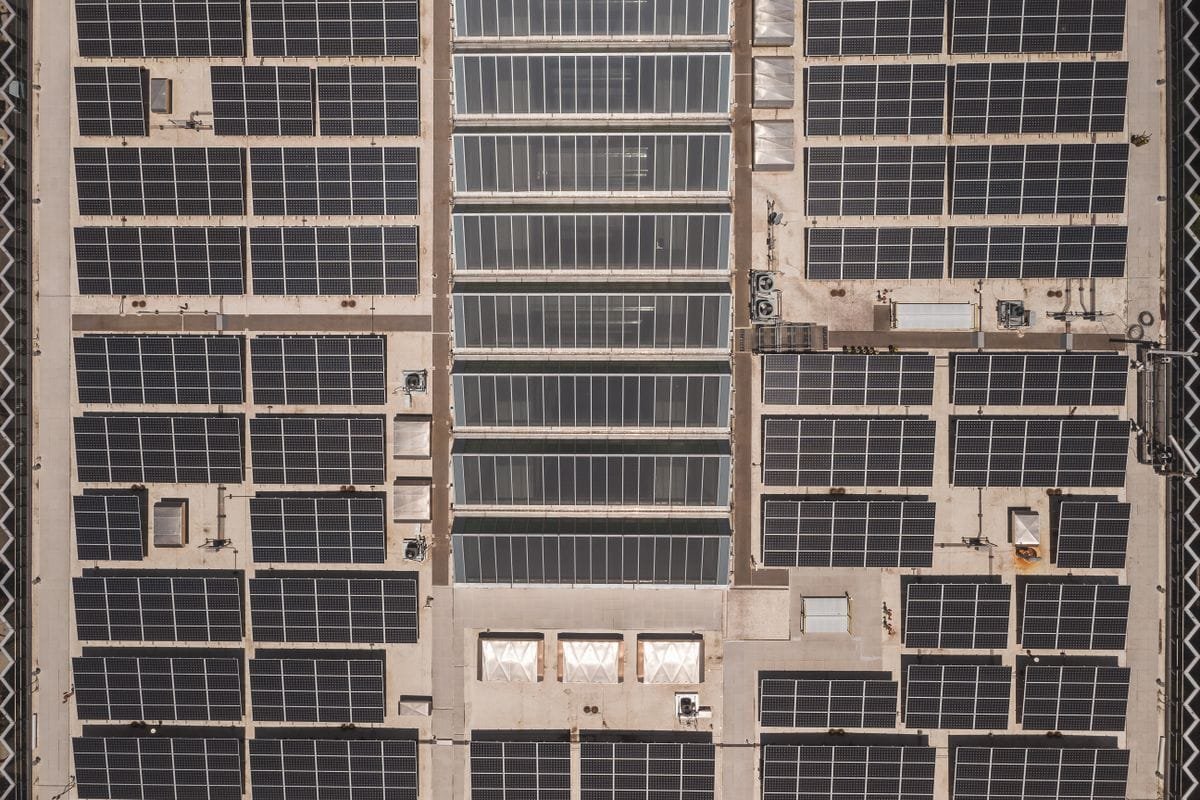
Most problems we see on factory roofs come from the roof, not the panels. Check these before you sign.
- Sheet roofs: confirm the purlins can carry the extra weight and wind load, and that clamps do not puncture the sheet. Replace old or rusted sheets first; lifting panels later costs money.
- RCC roofs: use a structure that leaves drainage clear and allows waterproofing repairs.
- Walkways: leave access for washing. Dust from nearby roads and industry builds up fast in Punjab, and dirty panels lose output.
- Fire and electrical safety: DC isolators, correctly rated cables, surge protection and proper earthing are not optional on an industrial site.
- Monitoring: insist on inverter monitoring so you can compare output against the design every month.
Frequently asked questions
Is solar worth it for factories in Pakistan under net billing?
Yes, for factories that use most of their power in daylight. Each unit used on site saves the off-peak industrial rate (about Rs23 before taxes for B2), while exported units earn only about Rs8. A well-sized day-shift system typically pays back in roughly two to three years.
What is the maximum solar system size for a factory?
Under the NEPRA Prosumer Regulations 2026, a system can be up to 1 MW and cannot exceed the premises’ sanctioned load. Systems of 250 kW or more need a load flow study, and systems above 25 kW need NEPRA concurrence and a one-time fee of Rs1,000 per kW.
Does solar reduce the fixed charges on an industrial bill?
No. B2, B3 and B4 consumers pay a fixed charge of Rs1,250 per kW a month, and solar does not change it. Solar reduces the energy units you buy from the grid.
Should a factory install batteries with solar?
Only if the battery will be cycled every day into the evening peak, or if outages stop production. Storing a solar unit instead of exporting it gains about Rs27.5 against the peak rate, but lithium storage is expensive, so payback is usually four to seven years.
How much roof space does a 100 kW system need?
Roughly 600-700 square metres of clear, unshaded roof, depending on panel size and walkway spacing. In Lahore it produces about 11,000-13,000 units a month on average.
Plan your factory’s solar with an engineer
PEMCO Engineering has installed more than 1 MW of solar, with over a decade of experience across 7+ Punjab cities, for homes, commercial buildings and factories. See our solar system installation service and our solar installation page for Lahore. Call or WhatsApp 0322 4773987, or use the contact form for a free consultation.
Written by the PEMCO Engineering Team. Rules from the NEPRA Prosumer Regulations 2026 and amendments as reported by Dawn and Business Recorder; tariffs from the February 2026 industrial notification as reported by The News and ProPakistani. Figures checked on 25 November 2026. Savings examples are illustrative, not quotations.