By the PEMCO Engineering Team, Lahore. Updated 23 November 2026.
Short answer
- An ARD or ELD is a rescue device, not a backup supply. When the power goes, it runs the cabin on its own battery to a landing, opens the doors and parks the lift until power returns.
- To keep using the lift through load-shedding you need a separate, properly sized supply: a lift-rated UPS or inverter with batteries, a generator with automatic changeover, or a hybrid solar system designed with the lift in mind.
- DHA Lahore lists backup power (ELD/UPS) as mandatory for houses and plazas, along with an alarm, cabin light and fan on backup, and an emergency door key on site.
- Rescue batteries die quietly, faster in a hot machine room. A power-cut test at every maintenance visit is the only way to know yours still works.
Families planning a home lift nearly always ask what happens when the light goes. Getting people out safely is simple and required. Keeping the lift working through two or three hours of load-shedding is a different job, and it is where most mistakes happen.
Why backup matters in Punjab right now
Load-shedding has not gone away in 2026, and a lift with no backup turns every outage into a possible rescue. In January, LESCO itself said three to six hours of load-shedding continued on high-loss feeders, while residents reported an hour off after every two. By late August the Express Tribune reported a national shortfall above 4,000 MW and a LESCO gap above 1,200 MW, with some Lahore areas off for an hour after every hour.
Add maintenance shutdowns and tripping transformers, and a Lahore lift can lose power several times a day.
What an ARD or ELD actually does
An automatic rescue device (ARD), which most Pakistani lift companies call an emergency landing device (ELD), finishes one trip on battery power and then stops the lift. It sits in the machine room, watches the mains and takes over when the supply fails.
On a traction lift (ropes and counterweight)
The ARD feeds the lift’s drive from its battery, moves the car slowly to the nearest floor, opens the doors and shuts down. A typical unit is small. One published datasheet, the Marstech ARD 1548 series, uses a 48 V sealed lead-acid battery of 18 Ah, takes over within about 10 seconds, and has a four-minute emergency time-out. Its single-phase 220 V model suits motors up to 8 kW and the three-phase 415 V model up to 15 kW.
Four minutes and 18 Ah are enough to reach a landing, not to run a day’s trips.
On hydraulic and screw-driven home lifts
Hydraulic lifts usually go down, not to the nearest floor. A battery opens the lowering valve, gravity brings the car to the bottom landing, and the battery opens the door. There is normally a manual lowering valve too, so a technician can bring the car down with no power at all, as in this Savaria home lift manual.
Compact home lifts are similar. Stiltz says its battery lowers the cabin to the lower level and the lift returns to normal when mains power is back, with an optional UPS for extra trips. Aritco’s platform lifts switch to a battery that takes the lift to the nearest floor if it stops between floors.
Rescue vs running: the options compared
Rescue devices and backup supplies solve different problems, and most lifts in Lahore need the first and some need both. The table puts them side by side.
| Option | What happens in a power cut | Lift usable during the outage? | Watch out for |
|---|---|---|---|
| ARD / ELD | Car moves to a landing on battery, doors open, lift parks | No | Battery ageing; must be tested |
| Battery lowering (hydraulic, screw lifts) | Car lowers to the bottom landing, door opens | No | Someone upstairs must walk down |
| Lift-rated UPS or inverter with batteries | Lift keeps working on battery | Yes, for a limited number of trips | Peak current, phases, battery size |
| Hybrid solar system (backup output) | Lift runs from solar and battery | Yes, if the backup output can carry it | Backup port rating, phases, energy fed back by the lift |
| Generator with automatic changeover | Short gap, then normal running | Yes, as long as there is fuel | Voltage and frequency stability, noise, approvals |
Keeping the lift running during load-shedding
If an elderly parent or a wheelchair user depends on the lift, a rescue device is not enough: plan a supply that can carry the lift for the whole outage.
1. A lift-rated UPS or inverter
The household UPS that runs your fans is usually the wrong machine. A lift motor draws a burst of current every time it starts, its drive needs a clean sine wave, and many lifts need three phases. A small single-phase UPS either trips or cannot feed the lift at all.
Size the backup from the lift maker’s figures, not from the motor’s kW alone. Ask for the drive’s input rating in kVA, its peak current and whether it is single or three phase. Then size the battery for the trips you need plus the controller, light and fan, which draw power even when the lift is idle.
2. A hybrid solar system
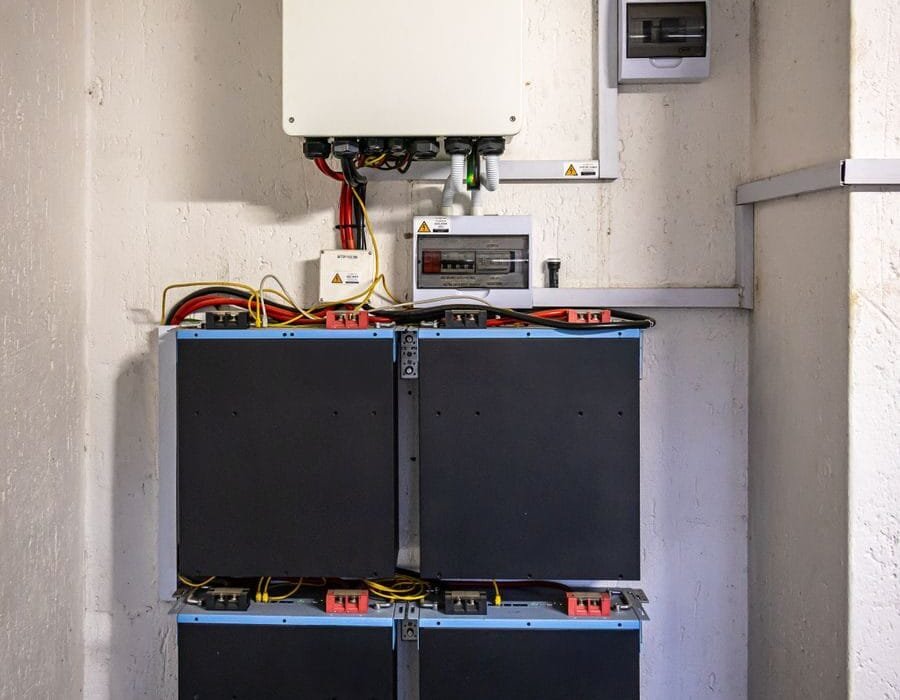
A hybrid inverter can carry a lift through load-shedding, but only if the lift is on its backup output and that output is big enough. Many hybrid inverters sold in Pakistan have a backup port smaller than the inverter’s headline rating, and a three-phase lift needs a three-phase inverter. Our comparison of on-grid vs hybrid solar systems explains why a plain on-grid system shuts down during an outage and cannot help here.
One trap catches even experienced installers. A lift going down loaded, or up empty, makes its motor act as a generator. Most drives burn that energy in a braking resistor, but regenerative drives push it back into the supply, and a battery inverter with full batteries may have nowhere to put it. In a discussion on Victron’s community forum, users point out that something else must absorb that energy when the batteries are full. Check with the lift maker and the inverter maker before connecting the two.
3. A generator with automatic changeover
Two points matter for the lift. First, the ARD should finish its rescue before the changeover switches the lift to the generator, so the timings must be set together. Second, lift drives dislike unstable voltage and frequency, so the generator needs a good voltage regulator and enough spare capacity for the lift’s starting current.
Generators bring paperwork too: DHA Karachi’s placement checklist, for example, asks for a soundproof, anti-vibration set and a structural certificate. Check your own society’s rules.
Planning a home lift?
Send us your house plan or stairwell photos and tell us who will use the lift. Our engineers will explain on a video call what backup it needs and how to size it. Free site survey in Lahore and nearby areas, video consultation anywhere in Punjab.
What DHA Lahore requires
DHA Lahore treats power-failure safety as non-negotiable, for a house just as much as a plaza. Its guidelines for lift installation include these items:
- Backup power (ELD/UPS): mandatory for houses and plazas.
- Cabin light and fresh-air blower connected to the ELD/ARD, so the cabin stays lit and ventilated during a rescue.
- Emergency buzzer or alarm: mandatory for both.
- Emergency key for the doors, obtained from the vendor and kept on site.
- ELD/ARD, control panel and distribution boards inside the machine room. Machine-room-less designs need DHA’s approval first.
- Emergency intercom: mandatory for plazas, recommended for houses.
- Preventive maintenance contract and log book for every lift.
The guidelines set no battery size; they ask for backup that works. Outside DHA, the same features are good practice. For plazas and apartment blocks, see our guide to passenger lifts for plazas and apartments in Lahore.
Rescue batteries: life, heat and testing
The most common backup failure is not a broken ARD but a tired battery nobody tested. The lift runs fine on mains for months, then sticks between floors in the next outage.
Many ARDs use sealed lead-acid batteries, and those age fastest in heat. A rooftop machine room in a Lahore June runs far hotter than the temperature battery life is rated at, and frequent load-shedding adds wear.
There is no fixed replacement date. Harmar, a US access-lift maker, notes there is no universal replacement interval and recommends regular inspection instead. In practice:
- Ask your maintenance company to switch off the mains with the car between floors and watch the rescue at every visit, and to write the result in the log book.
- Keep the machine room or cabinet ventilated and shaded. DHA already requires machine room ventilation.
- Replace the battery when the rescue gets slow or the device reports a low battery, not after the car has stuck.
- If the car ever stops between floors during load-shedding, treat it as a fault. Our guide to lift repair in Lahore covers what to do next.
Which setup suits your building
Every lift needs a rescue device. Whether it also needs running backup depends on who uses it and what an outage costs you.
| Building | Minimum | Worth adding |
|---|---|---|
| House, family use, 2-3 floors | ARD/ELD with cabin light, fan and alarm on backup | Lift-rated UPS or hybrid backup if an elderly or disabled person relies on the lift |
| Plaza or apartment block | ARD on every lift, intercom, emergency instructions in the cabin | Generator supply to at least one lift |
| Factory goods lift | ARD or battery lowering, alarm | Generator; a small inverter is rarely enough for a heavy goods lift |
| Hospital or clinic | ARD on every lift | Generator supply for bed lifts, planned with the hospital’s essential power |
Deciding on backup before the lift is ordered is cheaper than adding it later. Our guide to a lift for home in Pakistan covers types, space and running cost, and the hospital bed lifts guide covers clinics.
Frequently asked questions
Can my home UPS run my lift during load-shedding?
Usually not. A household UPS is rarely built for a lift motor’s starting current, and many home lifts need a three-phase supply. A UPS or inverter can run a lift only if it is sized from the lift maker’s figures for input kVA, peak current and phases.
Will a lift fall if the power goes off?
No. The brake, or the closed valve in a hydraulic lift, holds the car where it is. The risk is people being stuck in a hot, dark cabin. An ARD or ELD moves the car to a landing and opens the doors so they can walk out.
How long does an ARD battery last?
There is no fixed figure. Heat, frequent load-shedding and battery quality all shorten it. Have the rescue tested with the mains switched off at every maintenance visit, and replace the battery when the rescue gets slow or the device reports a low battery.
Can solar power a home lift during load-shedding?
Yes, with a hybrid system whose backup output is rated for the lift and has enough battery. A plain on-grid system switches off in an outage and cannot. Check phases, the backup port rating and how the inverter handles energy the lift feeds back when it brakes.
Is an ELD mandatory for a house in DHA Lahore?
Yes. DHA Lahore’s lift installation guidelines list backup power (ELD/UPS) as mandatory for houses and plazas, along with an alarm, a cabin light and fan connected to the backup, and an emergency door key kept on site.
Get backup right from day one
PEMCO Engineering has installed home lifts, passenger lifts and cargo lifts in houses, commercial buildings and factories across Punjab, and we design solar systems too, so the lift and its backup can be planned together. See our elevator and lift installation service or the lift installation page for Islamabad. Call or WhatsApp 0322 4773987, or use the contact form for a free consultation.
Written by the PEMCO Engineering Team. Rules checked on 23 November 2026 against DHA Lahore’s guidelines for lift installation. Equipment figures are examples from the makers’ published documents. General guidance only; your lift maker’s specification and a qualified engineer decide what backup your lift needs.