By the PEMCO Engineering Team, Lahore. Updated 25 November 2026.
Short answer
- Pakistani installers’ published November 2026 prices put a complete 5 kW on-grid system at about Rs7-8 lakh and a 10 kW on-grid system at about Rs9.5-13 lakh, installed.
- Hybrid systems cost more: roughly Rs9-13 lakh for 5 kW and Rs14-20 lakh for 10 kW, mostly because of the lithium battery.
- Panels now sell for about Rs38-43 per watt, so they are only around a third of the bill. The inverter, battery, structure and wiring decide the rest.
- Under net billing, the money is in the units you use yourself, not the ones you export. Size for your daytime use first.
We do not publish a fixed price list, because two houses with the same “10 kW” can need very different structures, wiring and backup. What we can do is show what the market is quoting this month, explain why quotes for the same size differ by lakhs, and point out the costs that tend to appear after you have paid the advance.
Solar system prices by size, 3 kW to 25 kW
Published 2026 prices for the same size spread by 30-50%, so treat any single number as a starting point. The table below collects what Pakistani installers and price sites show online. These are their figures, checked on 25 November 2026, not PEMCO quotations.
| System size | On-grid, no battery (PKR) | Hybrid (PKR) | Published by |
|---|---|---|---|
| 3 kW | 5.5-7.5 lakh (low end) | 5.1-5.9 lakh (packages) | APS Engineering, Scope Solar, GreenOH |
| 5 kW | 7-8 lakh | 9-11 lakh (packages); 11.1-13.1 lakh with 10 kWh lithium | Solar Citizen (Nov 2026), Scope Solar, GreenOH |
| 10 kW | 9.5-13 lakh | 13.9-16.5 lakh (packages); 14-20 lakh with lithium | Solar Pakistan Guide (Nov 2026), Scope Solar |
| 15 kW | about 16.5 lakh | up to about 23 lakh | APS Engineering |
| 20 kW | about 21.5 lakh | up to about 29 lakh | APS Engineering |
| 25 kW | No reliable published figure found. Scaling the 20 kW figures gives roughly Rs27-36 lakh. | Our arithmetic, not a quote | |
Notice the per-kW cost falls as systems grow. A 5 kW on-grid system works out at around Rs1.4-1.6 lakh per kW, while 20 kW is closer to Rs1.1 lakh per kW. The inverter, wiring, labour and paperwork do not double when the system doubles.
Also check the date on any price you are shown. A widely shared Daily Times report put a 10 kW system in Lahore at Rs9 lakh, but that was December 2025, before the June 2026 price jump.
Where the money goes
Panels are the part everyone asks about, but they are no longer the biggest cost in a hybrid system. Here is a typical split for a 10 kW system, built from component prices published this month.
| Component | Typical 2026 price (PKR) | Notes |
|---|---|---|
| Panels, about 10 kW (17-18 panels of 585W) | 3.8-5.1 lakh | At Rs38-51 per watt depending on brand and type |
| On-grid inverter, 10 kW | 1.2-1.8 lakh | Hybrid inverters run about 1.8-3.5 lakh |
| Lithium (LiFePO4) battery | Rs35,000-55,000 per kWh | Hybrid only. A 10 kWh bank is about 3.5-5.5 lakh |
| Mounting structure | 40,000-70,000 | Elevated or heavy-gauge structures cost more |
| Wiring, breakers, surge protection | 25,000-55,000 | DC and AC cables, earthing, SPDs |
| Bidirectional meter | about 18,500 | Required for net billing |
| Application and installation labour | 25,000-60,000 | Some installers include it, some charge it separately |
On panel rates, dealer listings tracked by SolarRate.pk on 23 November 2026 put the typical price at about Rs40 per watt: LONGi and Canadian Solar around Rs42, Jinko about Rs43, JA Solar and Trina about Rs38. That is roughly Rs22,000-27,000 for a 585W panel.
On-grid or hybrid: what the battery adds
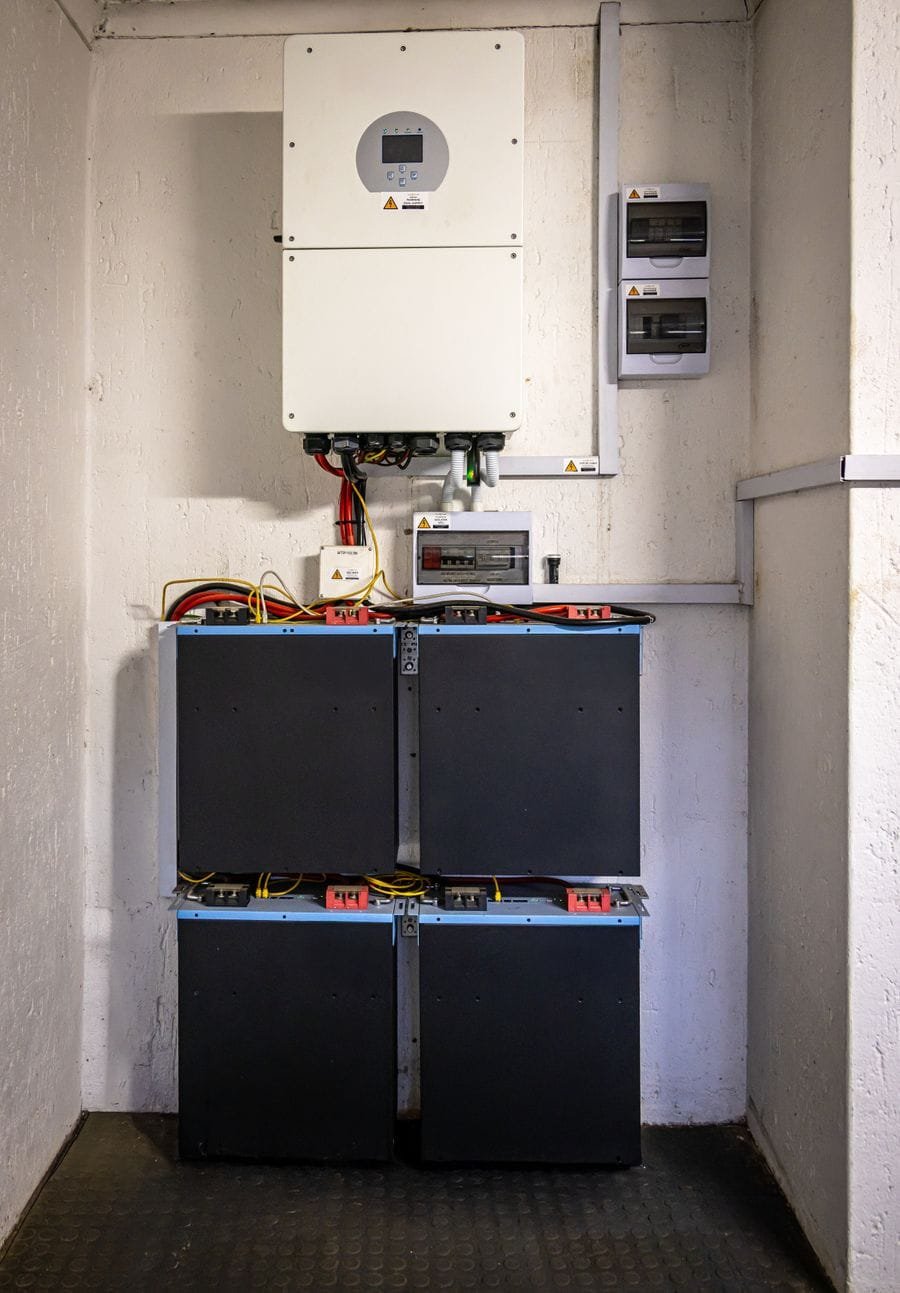
The battery is the single biggest reason a hybrid system costs Rs4-7 lakh more than an on-grid one of the same size. Lithium prices did fall this year. ProPakistani reported in September that a “5 kW” lithium battery in Lahore dropped from Rs2.5 lakh to Rs2.3 lakh. Shops often label batteries by inverter size rather than by kWh, so always ask for the kWh rating. Our lithium battery price and sizing guide lists current prices from 2.5 to 20 kWh and shows how to work out the size your house needs.
A battery makes sense if you face long load-shedding, run important loads at night, or cannot get a net billing connection. It makes less sense if your feeder is stable and your main aim is a lower bill. Our guide to on-grid vs hybrid vs off-grid solar works through that decision in detail.
Got a solar quote you are unsure about?
WhatsApp us the quote and your last electricity bill. Our engineers will tell you on a video call what it leaves out and what size your house really needs. Free site survey in Lahore and nearby areas, video consultation anywhere in Punjab.
Costs quotes often leave out
The cheapest quote is often the one that left the most out. Ask about each of these in writing before you compare totals.
- Structure type: a low, flush structure is cheaper than an elevated one that leaves your roof usable. Ask the steel gauge and whether it is galvanised.
- Cable runs: a quote may assume 10-15 metres. If the inverter is three floors down, the extra cable is yours.
- Earthing and surge protection: proper earth pits and DC/AC surge protectors are sometimes “optional”. They should not be.
- Net billing paperwork and meter: some installers include the application and bidirectional meter, others charge 25,000-60,000 extra.
- Sanctioned load or three-phase upgrade: if your connection is single-phase or your sanctioned load is lower than the system, the DISCO upgrade is a separate cost.
- Battery capacity in kWh: “with battery” means nothing without the kWh figure and the chemistry.
- Monitoring and after-sales: who answers when the inverter shows a fault code in the second year?
What changed in 2026: net billing, tax and fees
Three rule changes this year affect what a system is worth to you, more than they affect what it costs.
1. Net billing replaced net metering for new connections
Since 9 February 2026, new solar connections get net billing. Exported units are credited at about Rs8.13 per unit, while every unit you import is charged at your normal tariff. Existing net metering users keep their old terms until their agreement ends. Our net billing guide explains the maths.
2. Sales tax on panels stayed at 10%
Before the June budget, a rise from 10% to 18% was proposed and panel prices jumped by Rs7,000-9,000 per plate. The Finance Bill left the tax unchanged, and prices eased again. If a seller still blames “the new 18% tax”, that is out of date.
3. No NEPRA fee up to 25 kW
NEPRA first asked every applicant to pay Rs1,000 per kW, then withdrew the licence and fee for small systems in April, backdated to 9 February. Systems above 25 kW still pay a one-time Rs1,000 per kW, so a 30 kW factory system adds Rs30,000. Our guide to solar for factories covers the other rules for larger systems. The steps are in our LESCO solar application guide.
Which size do you actually need?
Start from your bill, not from the size your neighbour bought. In Lahore, each kW of well-installed panels produces roughly 110-130 units a month on average, less in December and January and more in spring.
- Step 1: Take your monthly units from the last 12 bills and average them, or look at summer and winter separately.
- Step 2: Divide by about 120 to get a rough system size. A house using 600 units a month points to about 5 kW; 1,200 units to about 10 kW.
- Step 3: Cut it back if most of your use is at night. Under net billing, surplus daytime units earn only about Rs8 each, so an oversized on-grid system pays back slowly.
- Step 4: Check your sanctioned load and phase. The system cannot exceed your sanctioned load, and net billing needs a three-phase connection.
Is it still worth it? A worked example
For a house that uses most of its solar in the daytime, solar still pays back in roughly three to five years, even under net billing. Here is a simple example. It is illustrative: it uses a flat Rs50 per imported unit and ignores taxes, fixed charges and slabs.
| 10 kW on-grid, Lahore house using 1,000 units a month | Figure |
|---|---|
| Bill before solar (1,000 x Rs50) | Rs50,000 a month |
| Bill on net billing (550 imported x Rs50, minus 750 exported x Rs8.13) | about Rs21,400 a month |
| Saving | about Rs28,600 a month, or Rs3.4 lakh a year |
| System cost (published on-grid range) | Rs9.5-13 lakh |
| Simple payback | about 3 to 4 years |
Now the honest side. If your house uses little power in the day, much of the output is exported at Rs8, and payback stretches. If you rent, plan to sell soon, or your roof is shaded by a taller building for half the day, a smaller system or waiting may be the better call.
Frequently asked questions
What is the price of a 10 kW solar system in Pakistan in 2026?
Installers’ published November 2026 prices put a complete 10 kW on-grid system at about Rs9.5-13 lakh and a 10 kW hybrid system with lithium battery at about Rs14-20 lakh. Structure, cable length and battery size explain most of the gap.
How much does a 5 kW solar system cost in Pakistan?
Published 2026 figures put a 5 kW on-grid system at about Rs7-8 lakh installed, and a 5 kW hybrid at about Rs9-11 lakh, rising to Rs11-13 lakh with a 10 kWh lithium battery.
What is the solar panel price per watt today?
Dealer listings in late November 2026 put the typical rate at about Rs40 per watt, with most Tier-1 brands between about Rs38 and Rs43. A 585W panel costs roughly Rs22,000-27,000.
Did the government raise sales tax on solar panels to 18%?
No. An increase from 10% to 18% was proposed before the 2026-27 budget, but the Finance Bill left the tax on solar systems unchanged, and prices eased afterwards.
Is solar still worth it in Pakistan with net billing?
Usually yes, if you use most of the power in the daytime. Each unit you use yourself saves your full tariff, often Rs40-55, while exported units earn about Rs8. A well-sized on-grid system in a Lahore house typically pays back in about three to five years.
Get a price for your roof, not a guess
PEMCO Engineering has installed more than 1 MW of solar, with over a decade of experience across 7+ Punjab cities. Brands we have installed include Jinko, LONGi, JA Solar and Canadian Solar panels with Inverex, Growatt, Solis and Sungrow inverters. See our solar system installation service, or our pages for Lahore and Islamabad. Call or WhatsApp 0322 4773987, or use the contact form for a free consultation and a written, itemised quote.
Written by the PEMCO Engineering Team. Market prices are other companies’ published estimates, checked on 25 November 2026; they are not PEMCO prices or quotations. Rules from NEPRA decisions as reported by Dawn, Dunya News and Daily Pakistan. Your final price depends on your roof, connection and the scope of work.